



The majority of first-time visitors to Phu Quoc end up somewhere on the Duong Dong–Long Beach corridor. The island-wide area guide covers all four zones; this one goes deeper on the zone most travellers actually choose — breaking down the specific sections of that 20km strip and what the trade-offs are in practice.
The short version
- Duong Dong town (not beachfront): cheapest beds on the island, night market walkable, 5–10 minutes on foot to the beach — best for budget travellers and anyone prioritising local food over sand
- North Long Beach (beachfront, near Dinh Cau): widest range of mid-budget hotels directly on the beach, most restaurants and bars within walking distance, the busiest section
- Mid Long Beach (8–15km south of Duong Dong): quieter beachfront, best mid-range resort value, fewer touts, 20-minute scooter from the night market
- South Long Beach (approaching the airport): the island’s luxury corridor; international resorts on a quiet, wide beach — but Duong Dong is 25–30 minutes by car
- Most first-timers do best on north Long Beach — maximum flexibility, all the convenience
What “Duong Dong” actually means
“Duong Dong” is both the name of the island’s main town and the broader administrative district covering the northwest of Phu Quoc. This creates genuine confusion when searching for accommodation.
When travellers say they want to “stay in Duong Dong,” they usually mean one of three things: in the town itself (inland, near the market and food streets), at the beachfront hotels that sit within the Duong Dong district, or simply anywhere in the northern part of the island. Booking sites use all three interpretations interchangeably.
For this guide: Duong Dong town means the blocks east of the beach — Tran Hung Dao runs parallel to the coast, and the town is the busy street grid between that road and the river behind it. Long Beach means the hotels and resorts that sit directly on or within 200 metres of the sand along Bai Truong, from Dinh Cau cape in the north down to the airport in the south.
Duong Dong town proper
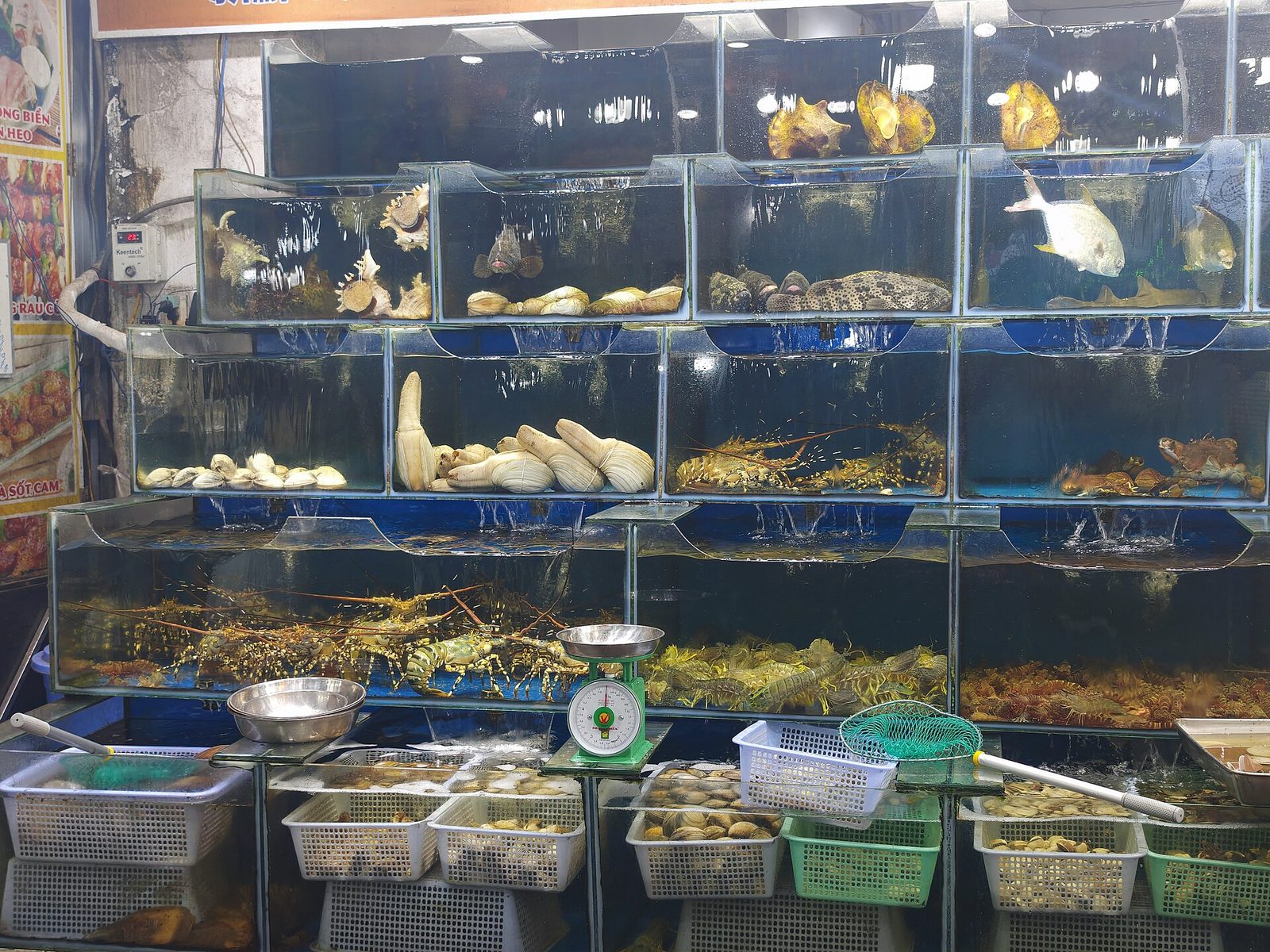
The town is where the island actually operates. The Dinh Cau Night Market runs every evening along Vo Thi Sau Street at the waterfront — grilled seafood, bánh mì, fresh juice, souvenir stalls. The main ATMs, pharmacies, laundries, scooter hire shops, and dive operators are all within a 5-minute walk of each other. Local pho restaurants open at 6am. The fish sauce factories are a short ride up the road.
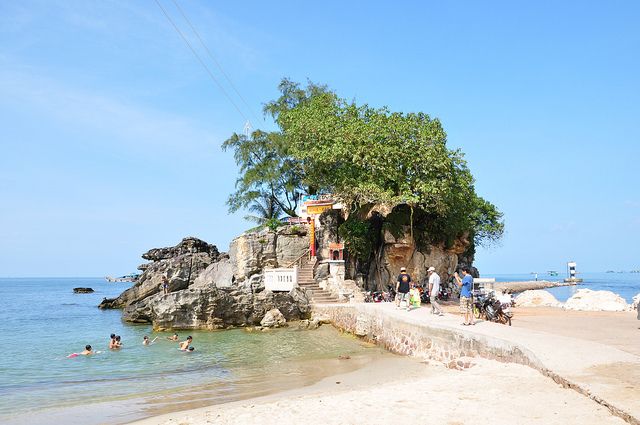
The beach is 5–10 minutes on foot from most accommodation in the town centre — not far, but a meaningful distinction if you’re planning multiple beach-to-hotel round trips per day in 35-degree heat.
Accommodation and prices
Guesthouses and small hotels in Duong Dong run from 300,000–900,000 ₫ per night (roughly US$12–36) for a clean room with air-conditioning, hot water, and decent Wi-Fi. At the upper end of this range you get a decent pool, a breakfast option, and a proper bed. The town has limited inventory above that price; once you want a beachfront pool and international-standard rooms, you’re looking at the Long Beach strip rather than the town itself.
Who it suits
Budget travellers who want to spend as little as possible on a bed and as much as possible on food. Digital nomads on a longer stay who need fast internet, supermarkets, and practical errands close by. Anyone running a busy itinerary — day trips to the south, north, and the evening market — where the accommodation is just a base.
Less suited to travellers for whom beach proximity is the point, couples wanting a romantic resort feel, or families with young children who want a pool they can use without organising transport.
North Long Beach — the busiest beachfront section
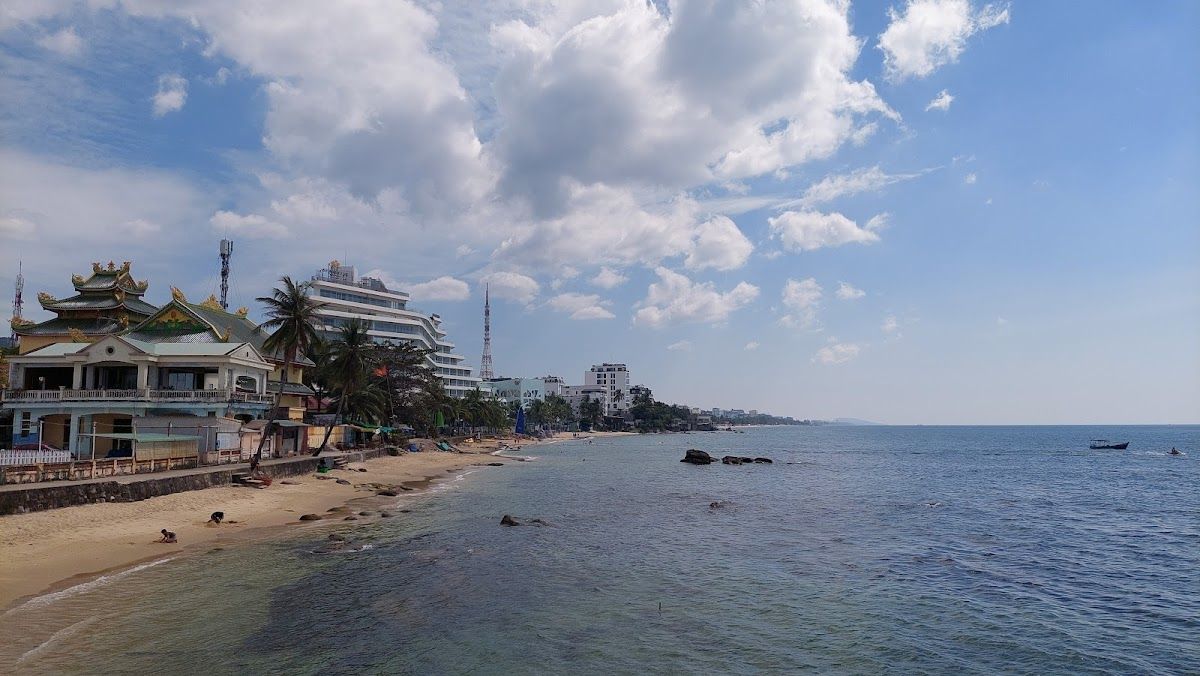
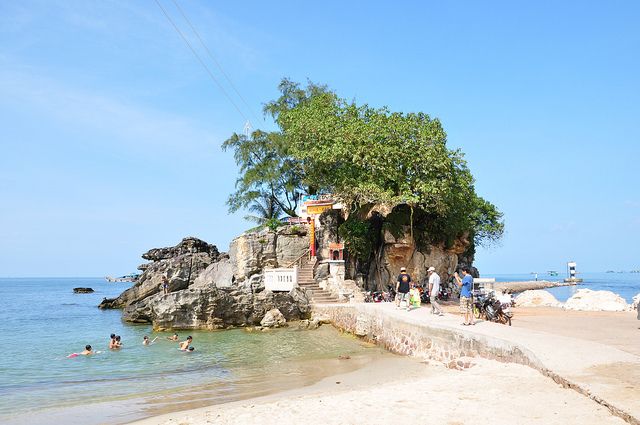
The northern end of Bai Truong runs from the Dinh Cau cape (the rocky point at the edge of town, where the Dinh Cau temple stands over the sea) south for roughly 5–8 km. This is the densest, liveliest section of the beach, with the most restaurants, bars, and mid-budget accommodation.
Hotels here sit directly on or within a short walk of the sand. Tran Hung Dao Street — the main road running behind the beach — has regular Grab coverage. The night market is 10–15 minutes by scooter north, or a short Grab at around 50,000–80,000 ₫ each way.
Accommodation and prices
This section carries the widest range of beachfront accommodation below the luxury tier on the island. Small beach bungalow operations start from around 700,000–1,200,000 ₫ per night (US$28–48). Proper mid-range hotels with pools and beach access run 1,200,000–2,500,000 ₫ (US$48–100). Above that you’re moving into international-brand territory and usually heading further south.
Properties here are a mix of independently run Vietnamese resorts and smaller international names. Beach access varies — some have private stretches, others share the public beach. Worth checking at booking which you’re getting.
Who it suits
First-timers who want beachfront convenience with the night market and town close by. Couples on a moderate budget. Groups who want a beach base with enough bars and restaurants within walking distance to fill most evenings without organising transport.
The downside is density: this section sees jet-ski operations, tour touts, and foot traffic in peak season. Not the place for a quiet morning swim. For beach quality across the island, see best beaches in Phu Quoc.
Mid Long Beach — the mid-range sweet spot
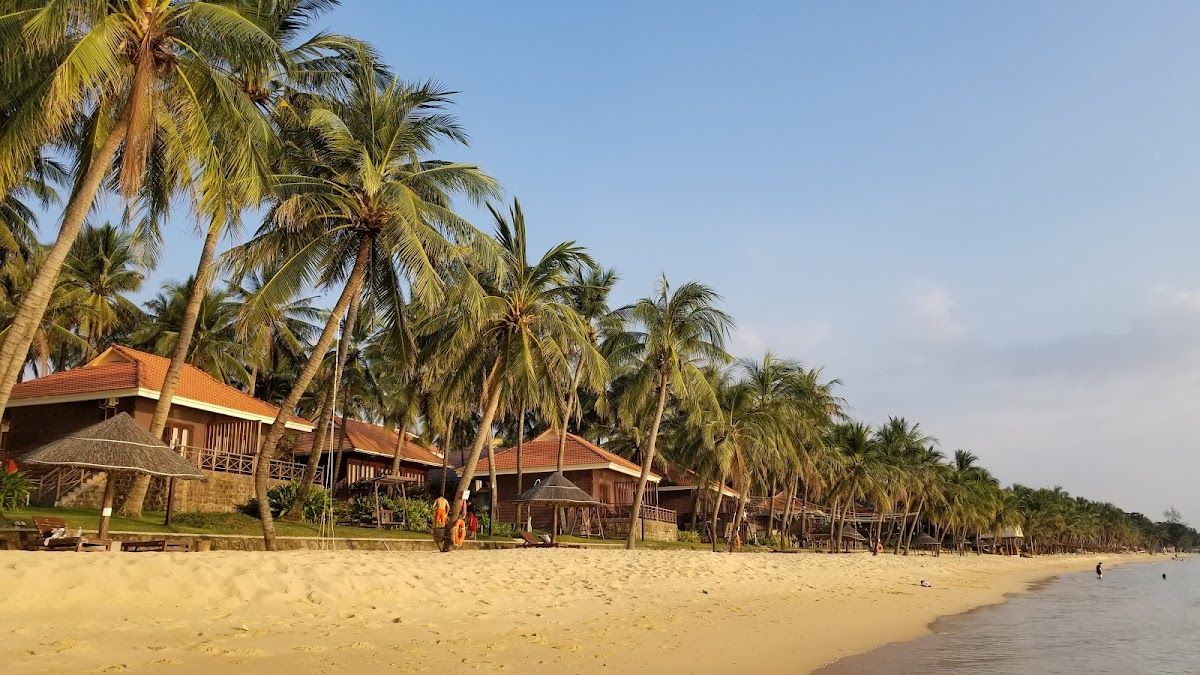
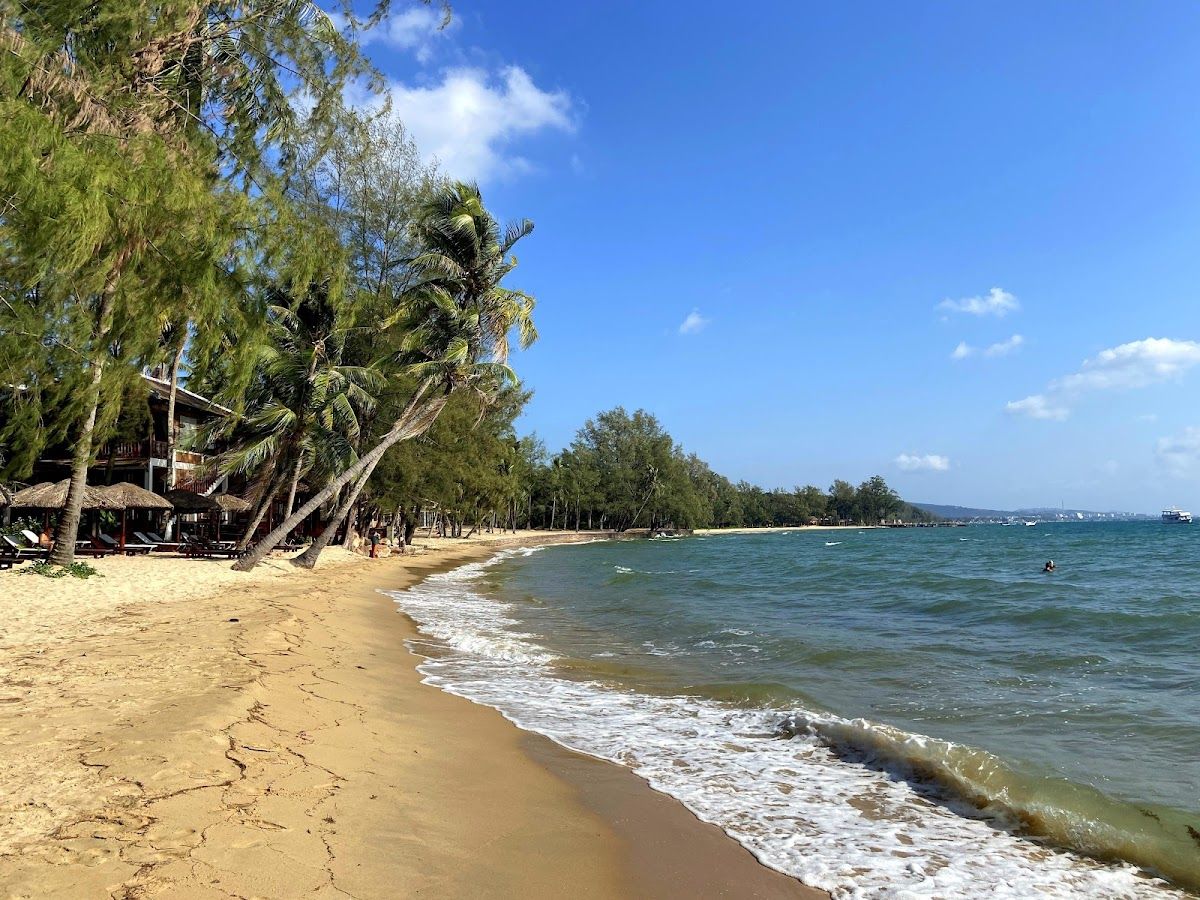
From roughly 8 km south of town down to about 15 km, Long Beach gets quieter, wider, and better maintained. The road noise drops, jet-ski density decreases, and accommodation is more consistently built for comfort than for turnover.
This is where a number of international mid-range resorts sit, alongside independently operated properties with beach gardens and multiple pools. La Veranda (MGallery) is one anchor here — a boutique colonial-style resort with around 70 rooms and villas on a private stretch of beach.
Accommodation and prices
Mid-range resorts in this section run from 1,500,000–4,000,000 ₫ per night (US$60–160), with the international names generally sitting in the 2,000,000–3,500,000 ₫ range (US$80–140) depending on season. Peak months (December to March) push prices higher; shoulder season (April, October) cuts them meaningfully.
What you get for the money is noticeably better than the north: larger rooms, better pools, more polished service, quieter beach access. The trade-off is distance: Duong Dong town is a 20-minute scooter ride or a 150,000–200,000 ₫ Grab each way. That’s manageable with a scooter rental (120,000–170,000 ₫/day from most guesthouses in town or delivered to your resort), but it changes the texture of the trip. The night market becomes a deliberate evening outing rather than an after-dinner stroll.
Who it suits
Couples and families who want a proper resort experience without paying top-tier prices. Travellers spending 5–7 days who want a comfortable base and are happy to organise transport for day trips and evening excursions. Anyone who has done north Long Beach before and wants something quieter.
South Long Beach — the luxury corridor
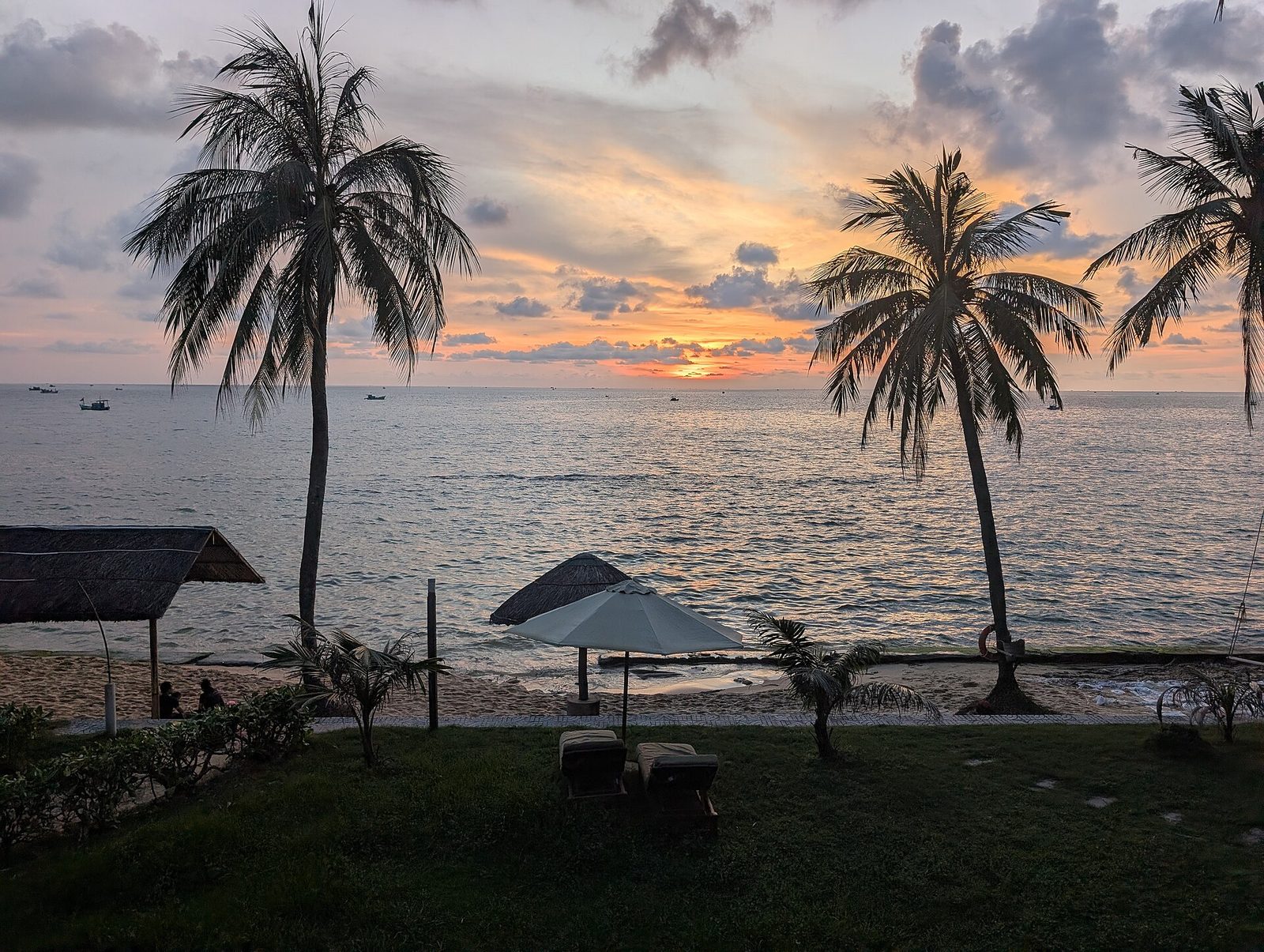
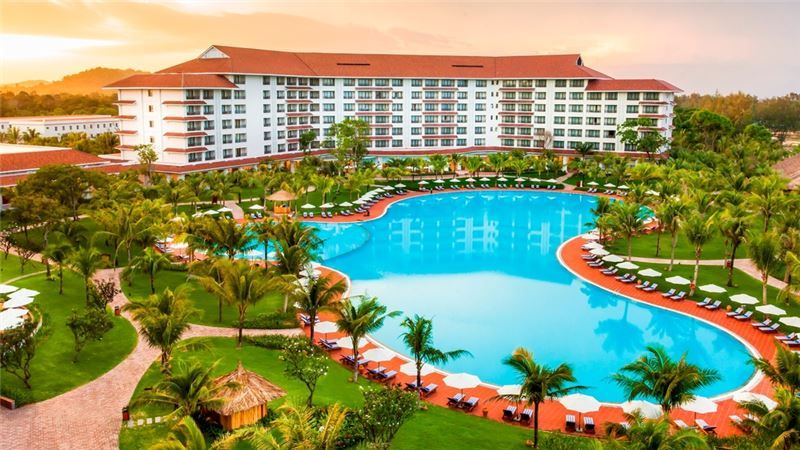
The southernmost stretch of Bai Truong, from roughly 15 km south of town to the airport area, is where Phu Quoc’s biggest international names sit. Salinda Resort, Novotel Phu Quoc Resort, and InterContinental Phu Quoc Long Beach are all in this zone — sitting 4–7 km from the airport and roughly 13–18 km south of Duong Dong.
The beach here is generally the widest and quietest on the strip — less foot traffic, more managed, cleaner. Properties sit on larger grounds with multiple pools, spa facilities, and enough on-site amenities that you could spend three days without leaving.
Accommodation and prices
Entry-level rooms at luxury properties in the south start from around 3,500,000–4,000,000 ₫ per night (US$140–160) in shoulder season. Peak December and January rates at the better properties run 8,000,000–12,000,000 ₫ (US$320–480) for a standard room.
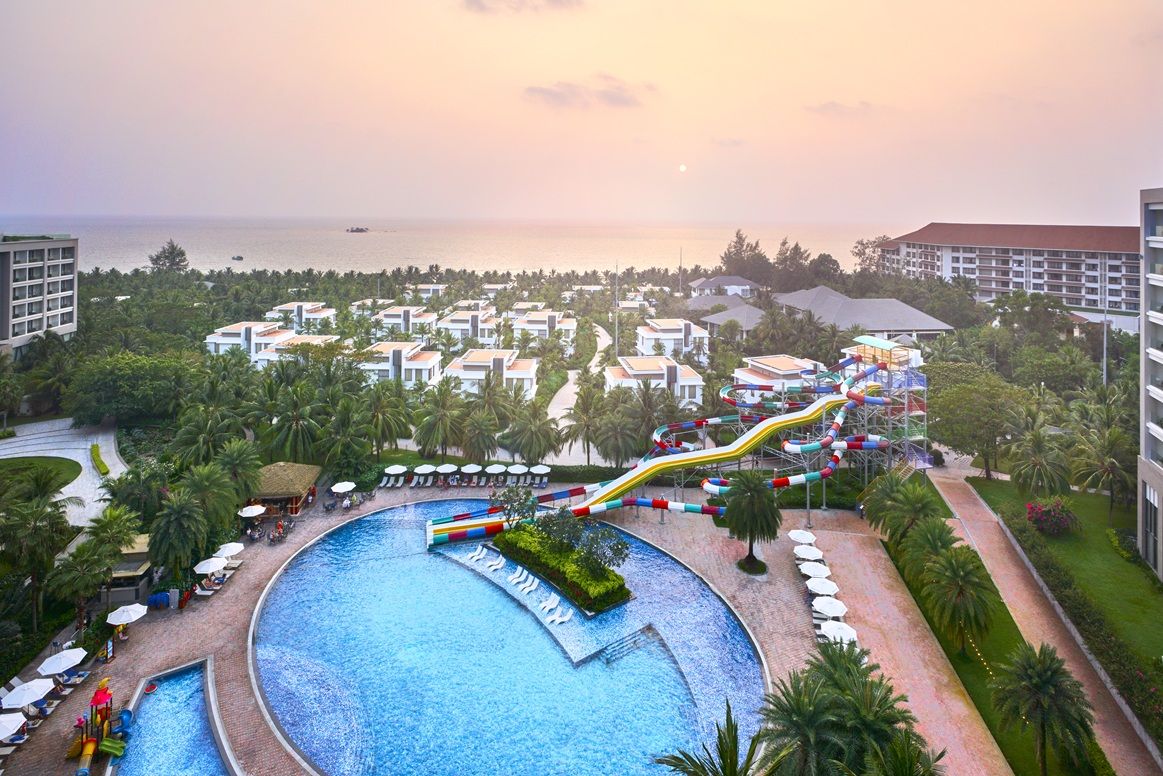
Salinda Resort (121 rooms, suites, and villas on 2.5 hectares of beachfront) is more boutique than the big chains, with a saltwater infinity pool and a strong reputation for service — it works well for couples and adults. InterContinental is the largest complex here and better suited to families wanting variety on site: multiple pools, restaurants, and enough programming to fill days without leaving.
Who it suits
Honeymooners and couples for whom the resort is the centrepiece of the trip. Families who want a full-service property where the kids’ pool, dining, and beach are all on-site without organising anything.
The main compromise: Duong Dong town is 25–30 minutes and around 200,000–300,000 ₫ each way by Grab. The night market, local seafood restaurants, and practical services require a proper outing. If you’re staying 3 nights and not planning to explore much, this matters less. For a 5+ night stay with a varied itinerary, it adds up quickly.
Getting between zones is covered in the getting around Phu Quoc guide.
Choosing between them
| You want | Best section |
|---|---|
| Cheapest beds, night market walkable | Duong Dong town |
| Beachfront under US$100/night, everything close | North Long Beach |
| Quieter beach, better resort quality, mid-range price | Mid Long Beach |
| International luxury, quiet beach, full-service resort | South Long Beach |
| First visit, maximum flexibility | North Long Beach |
Most first-timers land in north Long Beach. It balances beach access, price, and town convenience better than any other section for a 4–7 night trip. The only reason to deviate from that default is if your trip is specifically resort-focused (go south) or budget-focused (go inland to Duong Dong town).
For food and what to eat near each section, the Phu Quoc food guide covers the night market and the best restaurant areas across the island. To compare specific properties across these zones, browse hotels in Phu Quoc.
Leaning towards Long Beach? Booking.com has a Long Beach page you can check against the Agoda prices. Compare Long Beach hotels on Booking.com
Hotel-by-hotel prices for the strip are in the Long Beach hotels guide.
FAQ
Is Duong Dong town actually on the beach?
Not exactly. The town itself — the food streets, market, and practical services — sits just inland. There are beach access points along Tran Hung Dao, but the town blocks aren’t beachfront. The closest beach to the Duong Dong town centre is a 5–10 minute walk. Hotels described as “in Duong Dong” on booking sites may be in the administrative district while still sitting on the Long Beach strip rather than in the town grid itself.
How far is north Long Beach from the Dinh Cau Night Market?
About 2–3 km. By scooter that’s 10 minutes; by Grab around 50,000–80,000 ₫ each way. Walking in the heat is possible but most people take a scooter or ride-share for the evening trip.
Is south Long Beach far from Phu Quoc airport?
No — it’s close. Phu Quoc International Airport is at the southern end of the island, roughly 5–10 km from the south Long Beach resort corridor. From the terminal to properties like the InterContinental or Salinda takes about 10–15 minutes by Grab, compared with 30–40 minutes to Duong Dong town from the same airport.
Can I walk along the whole of Long Beach?
In theory yes. In practice, resort boundaries, rocky outcrops, and a few private sections break up the continuous walk. Walking the full 20 km in one go isn’t realistic. The north section is the most walkable end-to-end; mid and south require a scooter or Grab to get between points.
Which section of Long Beach has the best sunsets?
All of Long Beach faces west, so sunsets are consistent everywhere along the strip. North Long Beach has more beach bars to watch from; mid and south have quieter, less-crowded beachfronts. The sunset itself is the same — the infrastructure around it differs.
When is the cheapest time to book?
May through October (rainy season) brings the lowest accommodation prices across all sections — often 30–50% below peak. Shoulder months April and October offer good value with mostly decent weather. Peak season is December through March, with particular spikes around Christmas and Tet (Vietnamese New Year). More detail in the best time to visit Phu Quoc guide.