

A scooter and a free day will get you further on Phu Quoc than any organised tour. The island is big — about 50 km top to bottom — and the best parts of the north and south sit well off the resort strip. You need wheels that go where Grab doesn’t reliably reach.
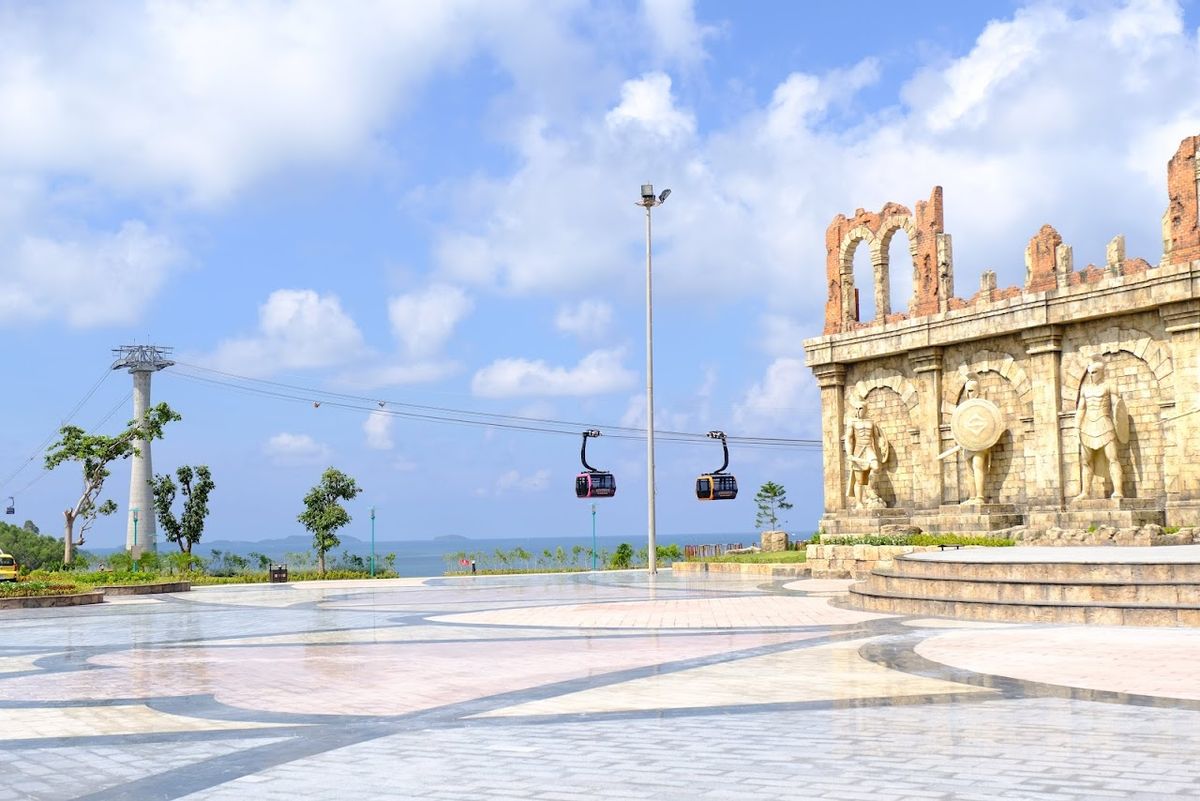
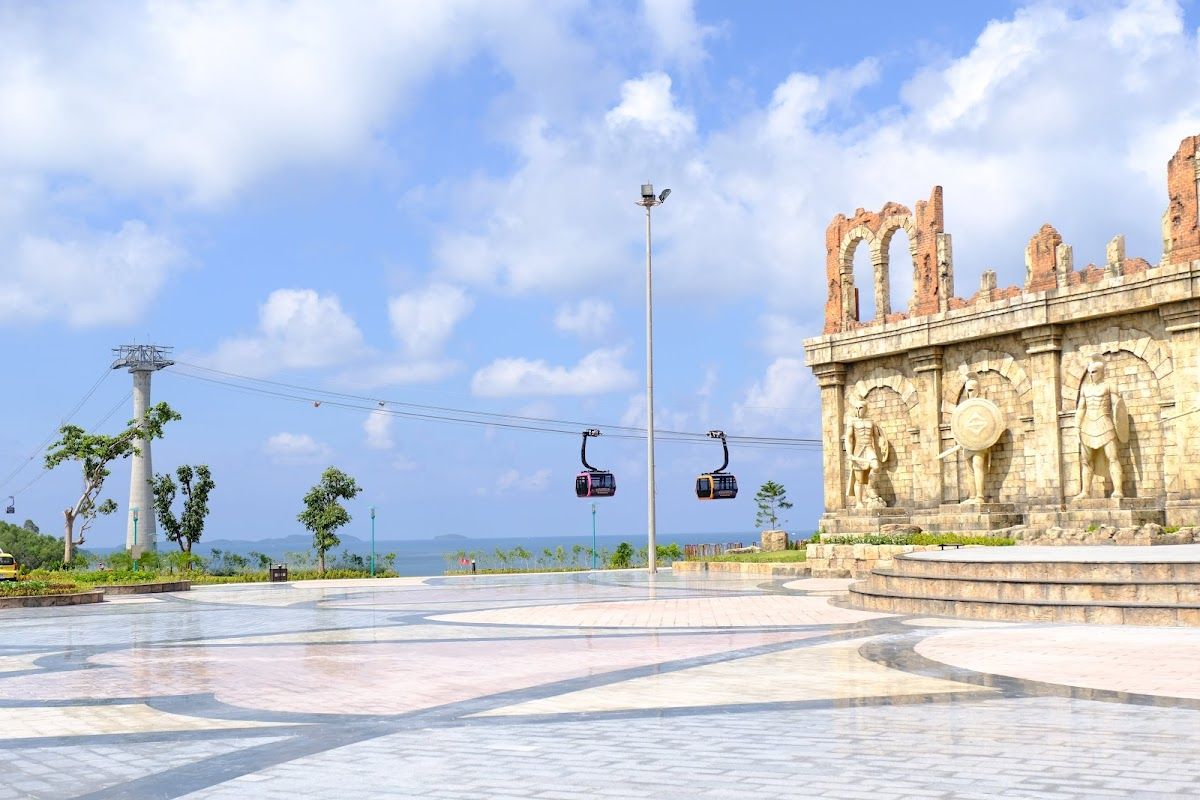
This guide covers the north and east of the island: the national park, Rach Vem starfish beach, the two main waterfalls, Ho Quoc Pagoda, and the Coconut Tree Prison in the south. For the theme parks at Ganh Dau (VinWonders, Grand World, the cable car), those have their own dedicated guides.
The short version
- Rent a scooter: 120,000–170,000 ₫/day (~US$5–7). The north is not reliably served by Grab
- Rach Vem starfish beach: northeast, ~40–50 min from Duong Dong; last 5 km is rough red dirt road; visit at low tide
- Suoi Tranh waterfall: 10 km from Duong Dong, entry 30,000 ₫ adult; flows best May–Oct
- Suoi Da Ban: further north, free or ~10,000–20,000 ₫; larger rocks, good swimming
- Ho Quoc Pagoda: east coast, free, open grounds; 30–40 min from Duong Dong
- Coconut Tree Prison: An Thoi (south), free, open 8:30–11:30 and 13:30–17:00
- North of the island is covered by Phu Quoc National Park (UNESCO biosphere reserve)
Getting Around the Island
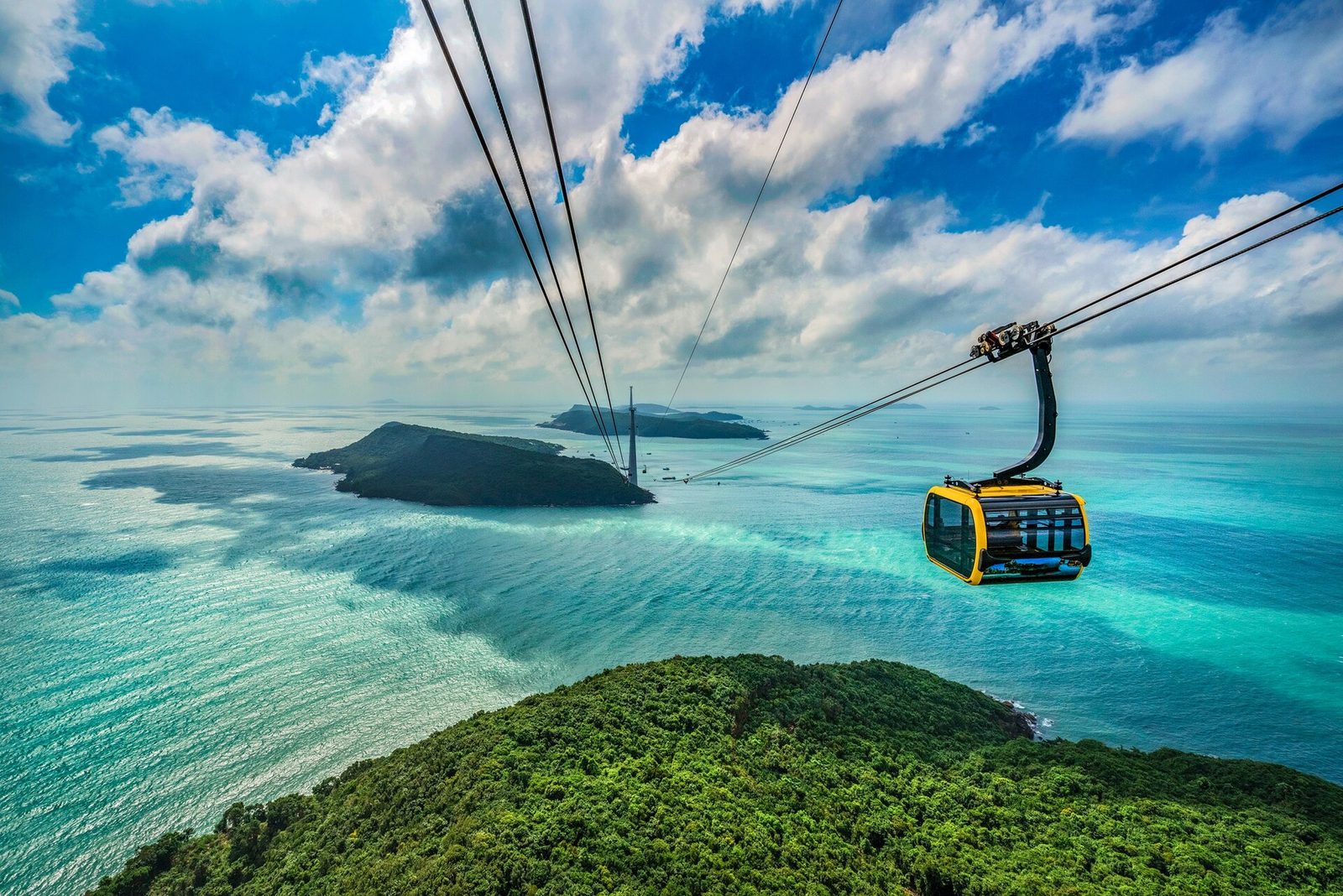
Phu Quoc is shaped like a teardrop roughly 50 km long. Duong Dong sits mid-west. The north is jungle; the south has the cable car, An Thoi town, and the archipelago. Most attractions worth seeing are 20–45 minutes from Duong Dong by scooter.
Grab works reliably in and around Duong Dong and from the airport. Further north or on the east coast, coverage thins. A scooter rental for the day — 120,000–170,000 ₫ — gives you complete flexibility. For anyone not comfortable riding, hiring a car with driver for a day costs around 700,000–1,200,000 ₫ depending on route and distance covered.
See the getting around guide for full transport detail including Grab fares and taxi tips.
Phu Quoc National Park
The national park covers about 31,000 hectares across the northern two-thirds of the island and extends into the adjacent sea. It’s a UNESCO biosphere reserve — old-growth tropical forest with hornbills, macaques, and ground-level animals you’ll hear more than see. The park isn’t heavily developed for trekking in the way that mainland parks are; most visitors pass through it en route to other sites rather than coming specifically for trail running.
Ganh Dau cape, at the island’s far northwest tip, sits within the park boundary and is just a few kilometres from the Cambodian coast. On a clear day you can see the mainland. The road through the park to reach it is one of the better scooter rides on the island: shaded, relatively quiet, and passing through proper forest rather than resort construction.
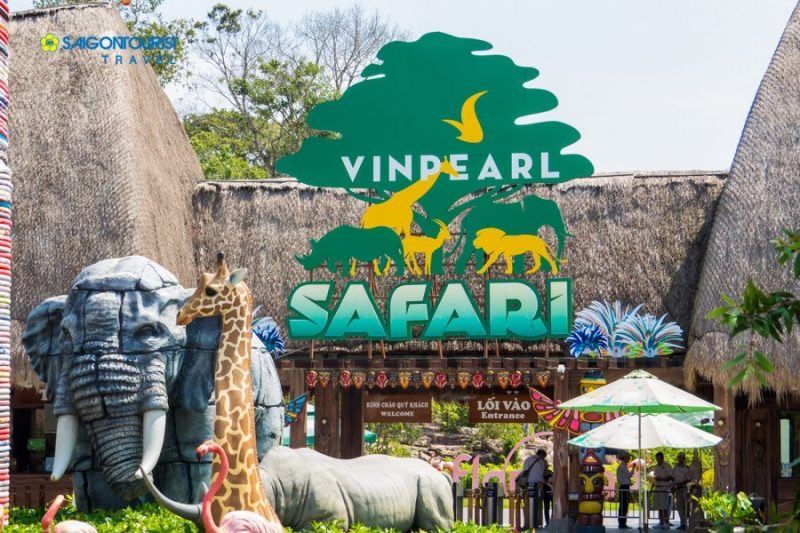
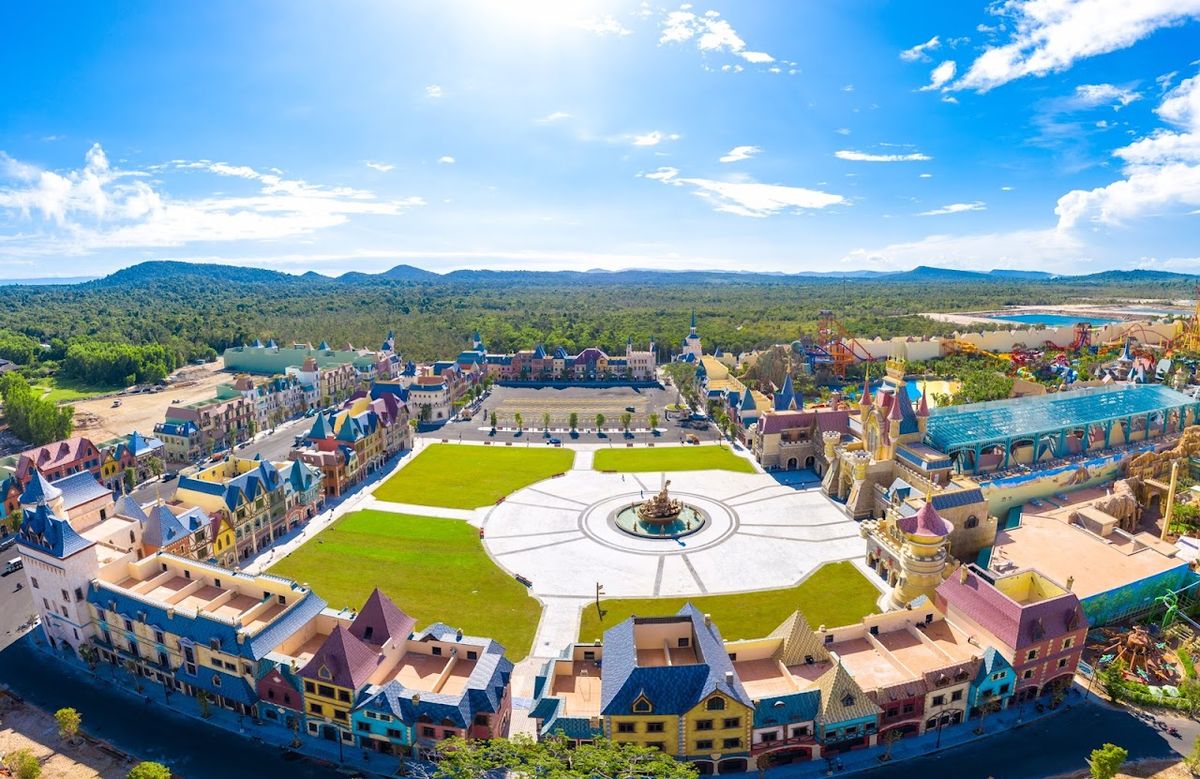
VinWonders and Vinpearl Safari also sit in the northwest Ganh Dau area — see the VinWonders guide for those.
Rach Vem: The Starfish Beach
The setup at Rach Vem is a shallow bay in the far northeast, where red sea stars (starfish) gather in the shallows at low tide, and a cluster of floating seafood restaurants operate just offshore. It’s not a swimming beach — it’s ankle-deep mud and sand — but the starfish are genuinely striking, and the floating shacks are a good reason to eat lunch.
Getting there: From Duong Dong, head north and then northeast — about 20–25 km, 40–50 minutes by scooter. The last stretch is a 5 km red dirt road, which is rough but passable on a standard scooter at moderate speed in the dry season. In wet season (May–Oct) it can be slippery; allow extra time and go slowly.
When to go: Low tide gives you the best starfish viewing — the water is clearest and the animals are most visible in shallow water. Early morning (before 9:00) tends to be quieter. The floating seafood restaurants open for lunch from around 10:00–11:00; a meal at one of them — steamed seafood, rice, morning glory — runs 150,000–300,000 ₫ per person.
Practical note: There are no reliable entry fees for the beach itself. Some boat operators charge a small amount (50,000–100,000 ₫) to take you out to the floating restaurants if you don’t want to wade. Be careful not to pick up or remove starfish — the ecosystem at Rach Vem has been under pressure from tourism, and the animals need to stay in the water.
Rach Vem pairs naturally with Ham Ninh fishing village on the east coast (good for crab at lunch) — see the food guide for Ham Ninh detail.
Suoi Tranh Waterfall
Suoi Tranh is the easiest waterfall to visit — about 10 km from Duong Dong, well signposted, with a proper entrance gate, parking, and a short walking path through forest to the falls.
Entry: 30,000 ₫ adult (~US$1.20), 20,000 ₫ child. Open 7:00–18:00 daily.
The falls themselves are a series of tiered cascades over smooth granite, with a pool below for swimming. In the wet season (May–Oct) and just after, the flow is strong and photogenic — this is when Suoi Tranh looks like the pictures. In dry season (Feb–Apr) the water can reduce to a trickle; it’s still pleasant for the forest walk but not worth a long detour if you’ve already seen it in better flow.
The park around the falls has some basic food stalls and picnic spots. Allow 1–1.5 hours for a relaxed visit.
Suoi Da Ban
Suoi Da Ban is further north and feels less packaged than Suoi Tranh. The draw here is the stream itself: clear water running over and between large granite boulders, with natural pools that are good for swimming and rock scrambling.
Entry: Free or around 10,000–20,000 ₫ for parking/access depending on what’s operating when you visit. Open roughly 8:00–17:00.
The access road heads north from the main highway — ask locals or your hotel for current directions, as signage has been inconsistent. From Duong Dong it’s about 30–40 minutes by scooter. Like Suoi Tranh, the water level is significantly better from May through to October; in February–April it can be low. If you’re visiting in the wet season, Suoi Da Ban is the better of the two waterfalls.
Both waterfalls can be done in a single day trip from Duong Dong, though combining Suoi Da Ban with Rach Vem on the same day makes for a long ride; build in time.
Ho Quoc Pagoda (Thien Vien Truc Lam Ho Quoc)
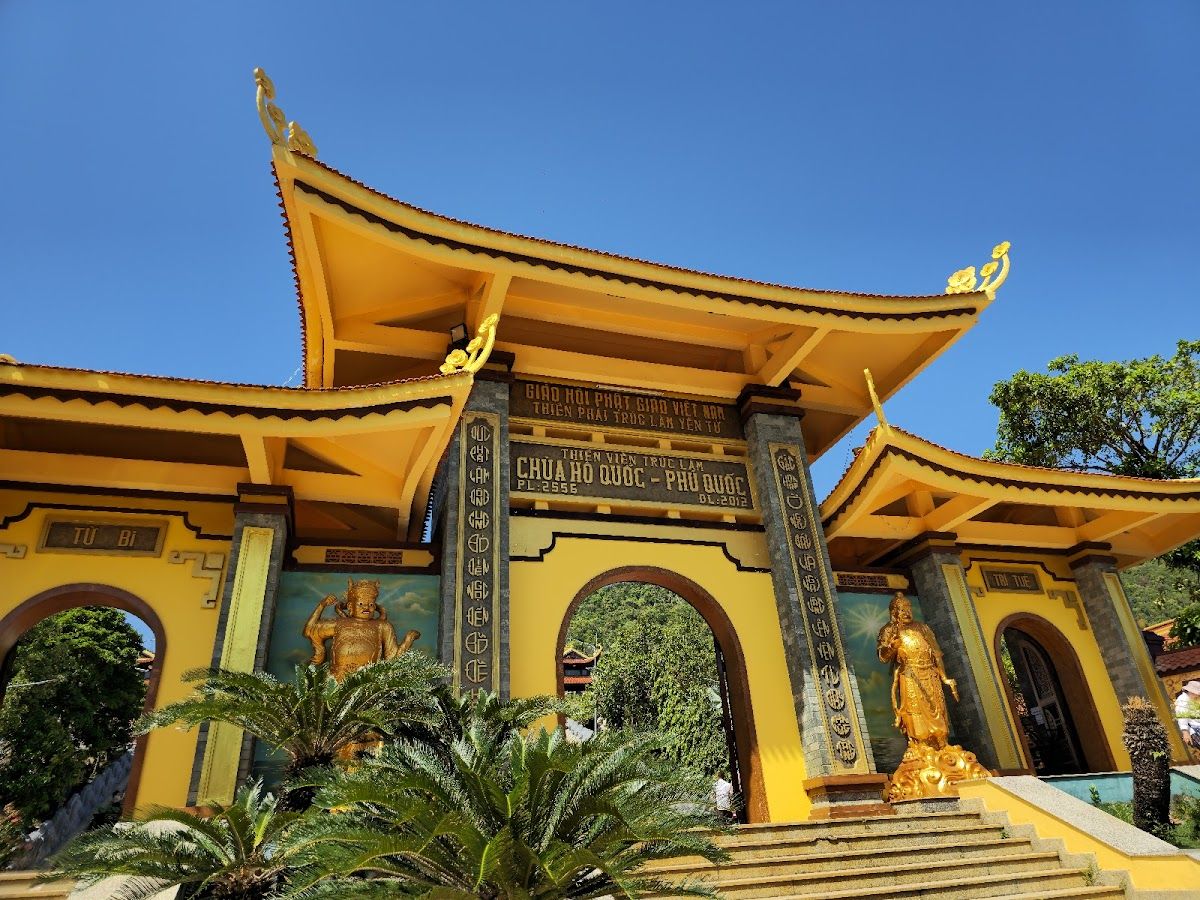
Ho Quoc Pagoda sits on the east coast, cut into a hillside looking out over the sea. It’s one of the visually strongest spots on the island — the ornate yellow-and-gold gate, the tiered roof lines, and the water behind them photograph well in any light.
The pagoda is a working Buddhist temple; monks are in residence. Entry is free, the grounds are open, and there’s a viewpoint platform higher up the hill looking back over the coastline and inland jungle.
Getting there: About 30–40 minutes from Duong Dong by scooter. Head south on the main highway then east on the cross-island road toward Ham Ninh; the pagoda is signposted off this road. It’s a reasonable pairing with Ham Ninh village further south.
Dress: Cover shoulders and knees before entering the temple buildings. Light scarves are available at the gate for a small fee if you arrive underprepared.
There’s no entrance fee. Budget an hour — the walk up to the viewpoint takes about 15 minutes and the view from the top is the payoff.
Coconut Tree Prison (Phu Quoc Prison Museum)
The Coconut Tree Prison — formally the Phu Quoc Prison Complex, also called Phu Quoc Detention Camp or Nha Lao Cay Dua — sits near An Thoi in the south of the island. It held political prisoners and prisoners of war during both the French colonial period and the American-Vietnam War, and the conditions documented here were severe.
The museum is a mix of original structures, reconstructed cells, and graphic displays. It’s not comfortable viewing — the exhibits include wax figures depicting torture and imprisonment — but it’s an honest account of a difficult history that shaped the island.
Entry: Free. A small tip for any guide is appropriate if offered.
Hours: 8:30–11:30 and 13:30–17:00. Closed at lunchtime.
Getting there: An Thoi is about 25–30 km south of Duong Dong, around 40–50 minutes by scooter. It pairs logically with a visit to Sunset Town and the Hon Thom cable car terminal in the same area — see the An Thoi and islands guide for that.
Allow 1–1.5 hours. The site is not large but the exhibits reward taking your time.
Grand World

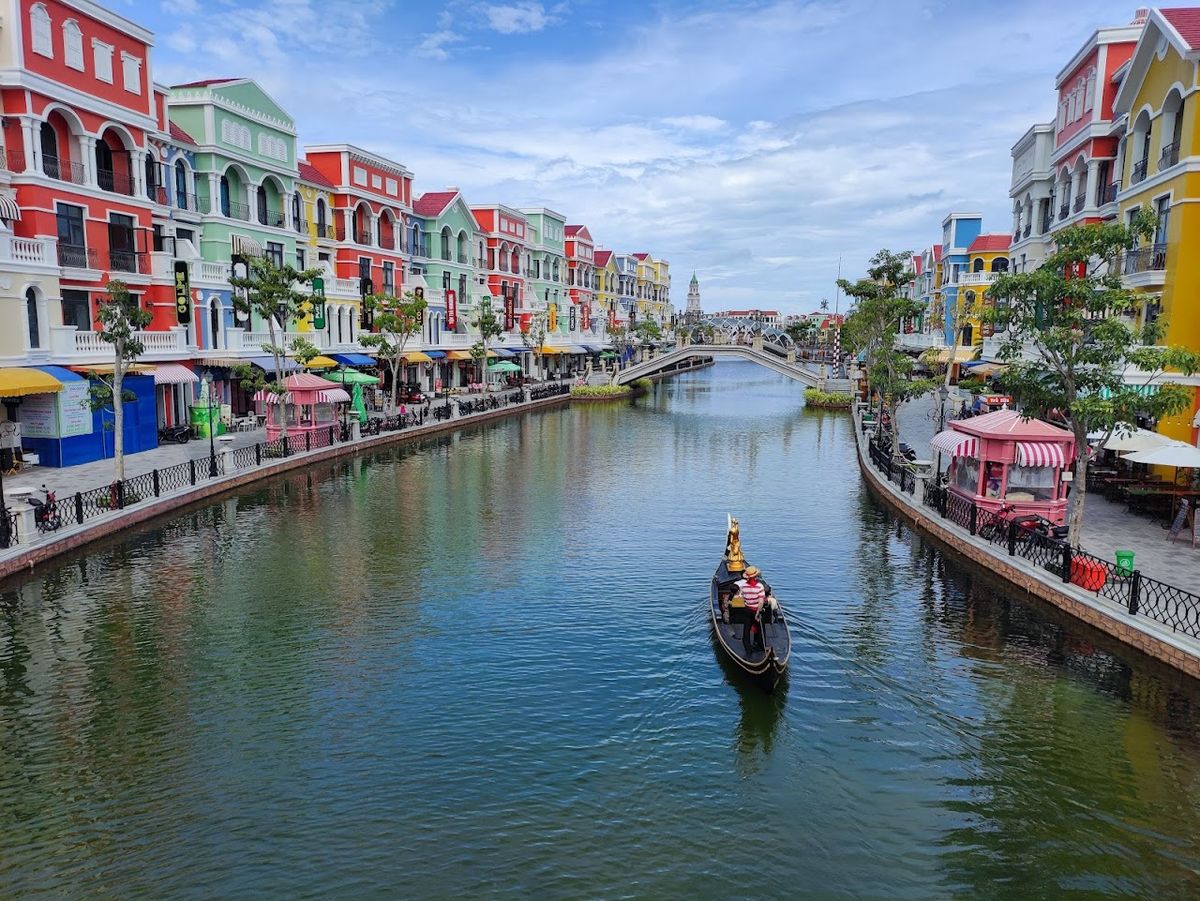
Grand World, in the northwest at Ganh Dau, is free to enter. It’s a large-scale entertainment and dining development — European-style canals with gondolas, walkways, restaurants, the Teddy Bear Museum, and evening light shows. It’s peak kitsch, entirely artificial, and genuinely fun in the evening when the light shows run and the restaurants fill up.
It’s worth seeing once, especially if you’re in the northwest already for VinWonders or Ganh Dau cape. Entry is free; pay per activity (gondola rides, museum entry, food). Evening is unambiguously the better time — Grand World by day is empty and odd; by night it makes more sense.
Planning Your Day
The north and east of Phu Quoc work well as a single long day trip — leave Duong Dong by 8:00 on a scooter, stop at one of the waterfalls on the way north, continue to Rach Vem for lunch, and come back through Ham Ninh or via Ho Quoc Pagoda. Allow 8–9 hours comfortably.
The south (Coconut Tree Prison, An Thoi, cable car) is a separate half-day or full-day in the other direction.
For what to do on the resort-side of the island — beaches, snorkelling, island-hopping — see /activities/.
For accommodation, /hotels/ covers options from Duong Dong guesthouses to the north island resorts.
FAQ
How do you get around the north of Phu Quoc?
Rent a scooter, about 120,000–170,000 ₫ for the day. Grab is reliable around Duong Dong and the airport, and patchy further north. A car and driver is about 700,000–1,200,000 ₫.
How much is Suoi Tranh waterfall?
30,000 ₫ for an adult and 20,000 ₫ for a child. It is about 10 km from Duong Dong and open 7:00–18:00. It is worth it from May to October, when there is water.
Is Ho Quoc Pagoda free?
Yes. The grounds are open, and it is about 30–40 minutes from Duong Dong.