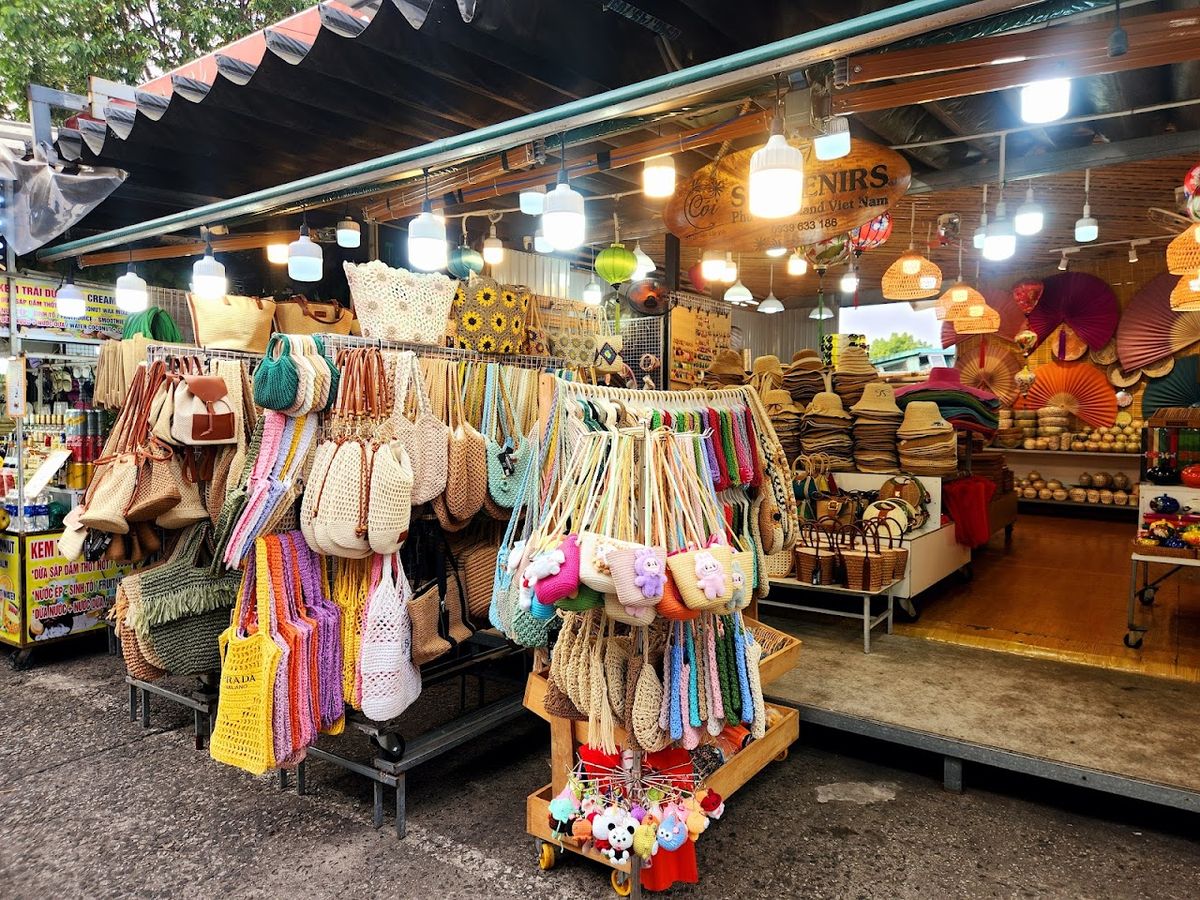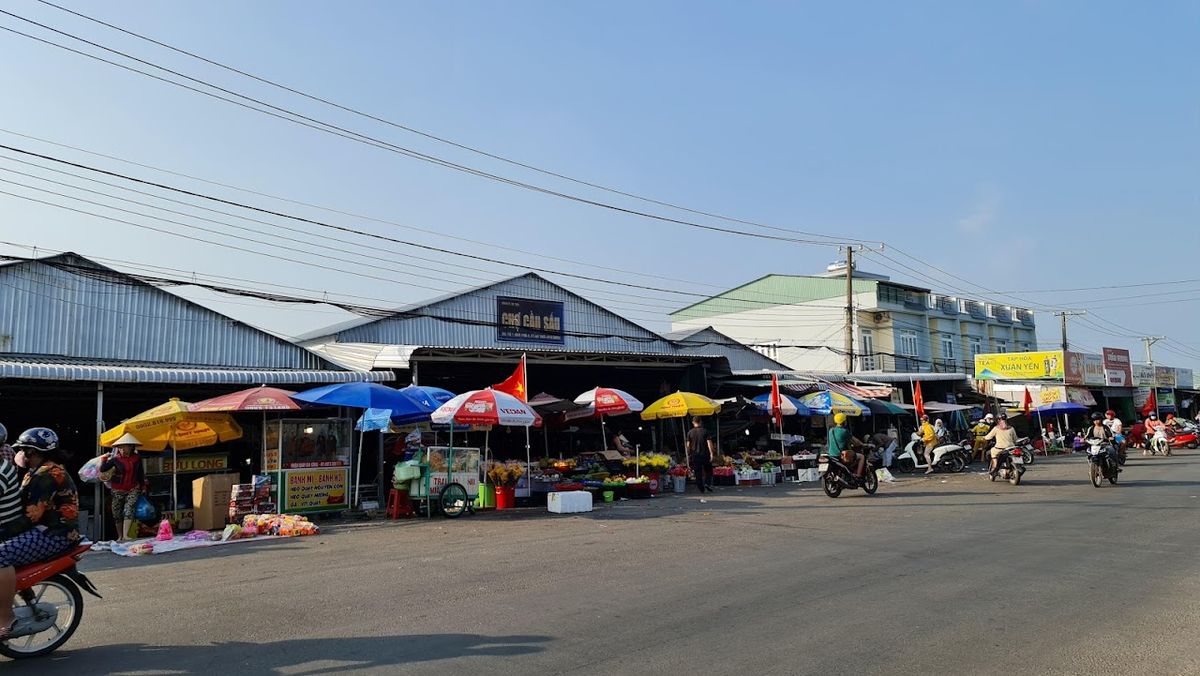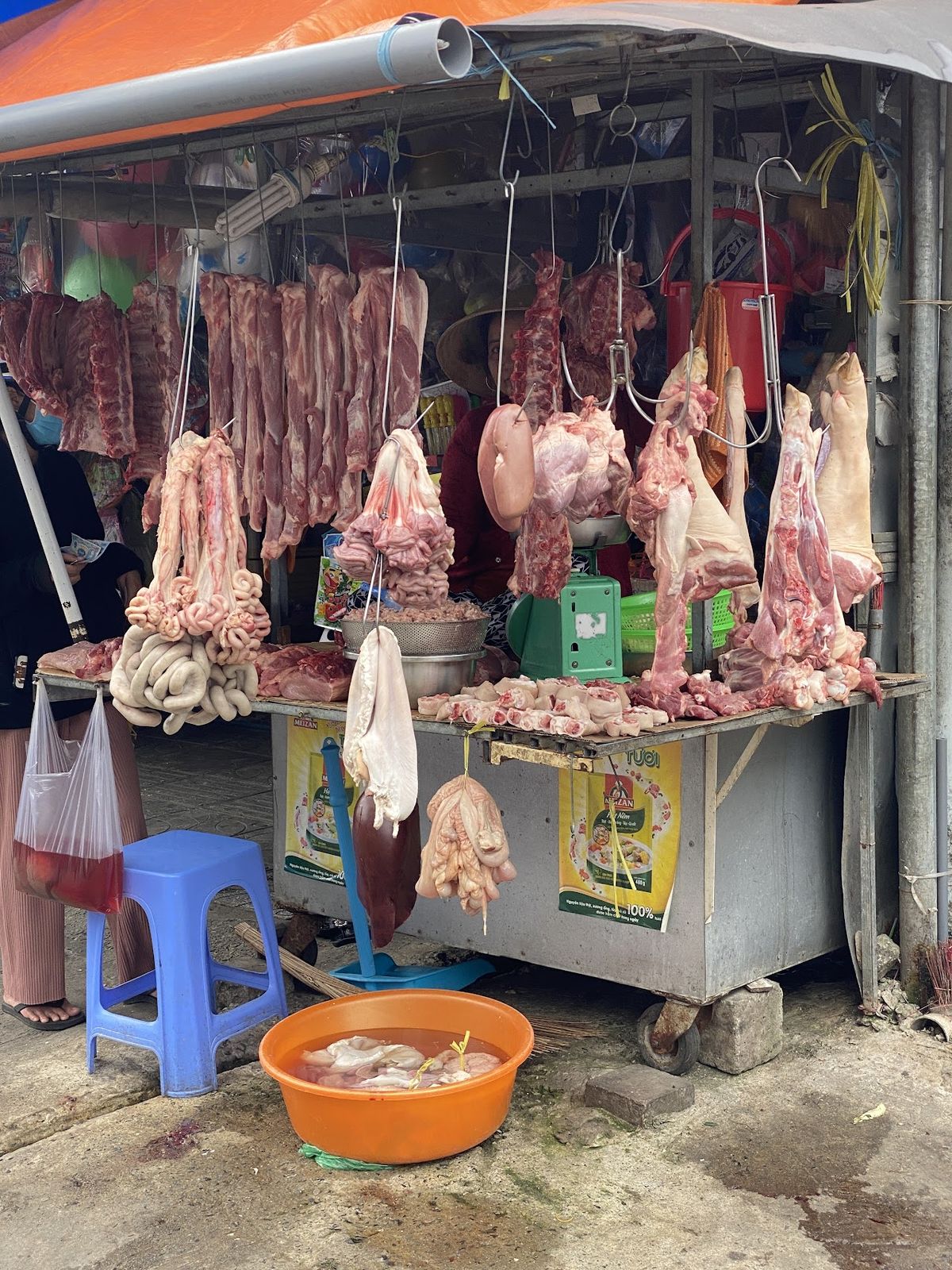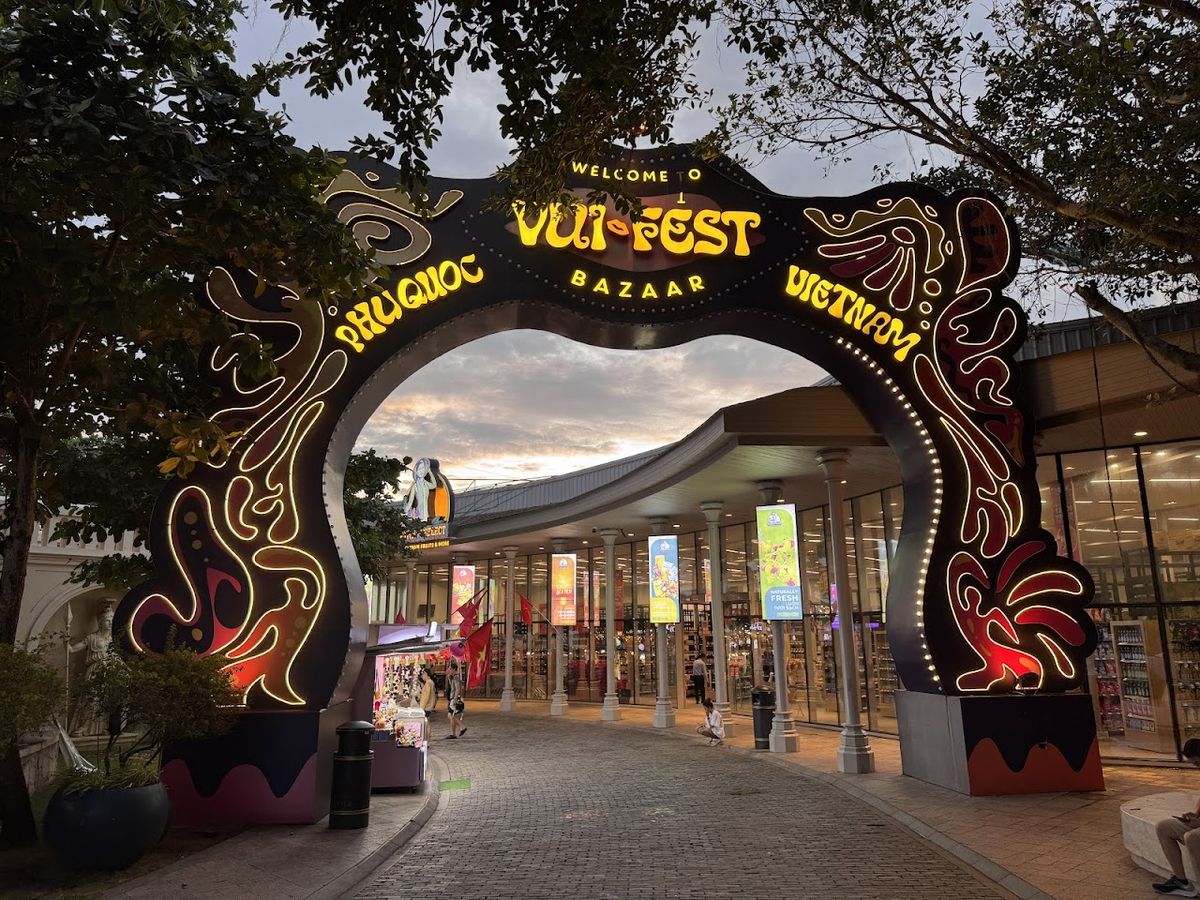


The most important food decision on Phu Quoc is this: don’t eat at your resort every night. The island grows its own black pepper, brews its own wine from wild hill berries, and produces fish sauce that serious Vietnamese cooks seek out by name. At the night market in Duong Dong, a bowl of fresh noodle soup costs less than US$2. On the east coast, you can sit at a weathered stilted restaurant and eat flower crab pulled from the water that morning.
None of that requires planning. You just need to leave the resort.
The short version
- Dinh Cau Night Market (Bach Dang Street, Duong Dong) is the go-to for cheap seafood — start from 18:00
- Ham Ninh, east coast, ~30 minutes by scooter: eat crab where the fishermen land it
- Khai Hoan fish sauce factory: free daily tours, worth an hour of your time
- Sim wine (ruou sim) is made from local rose-myrtle berries — try before you buy at a farm tasting
- Goi ca trich (raw herring salad) is Phu Quoc’s most distinctive local dish
- Black pepper farms north of Duong Dong offer tours; the pepper here has GI protection
Dinh Cau Night Market
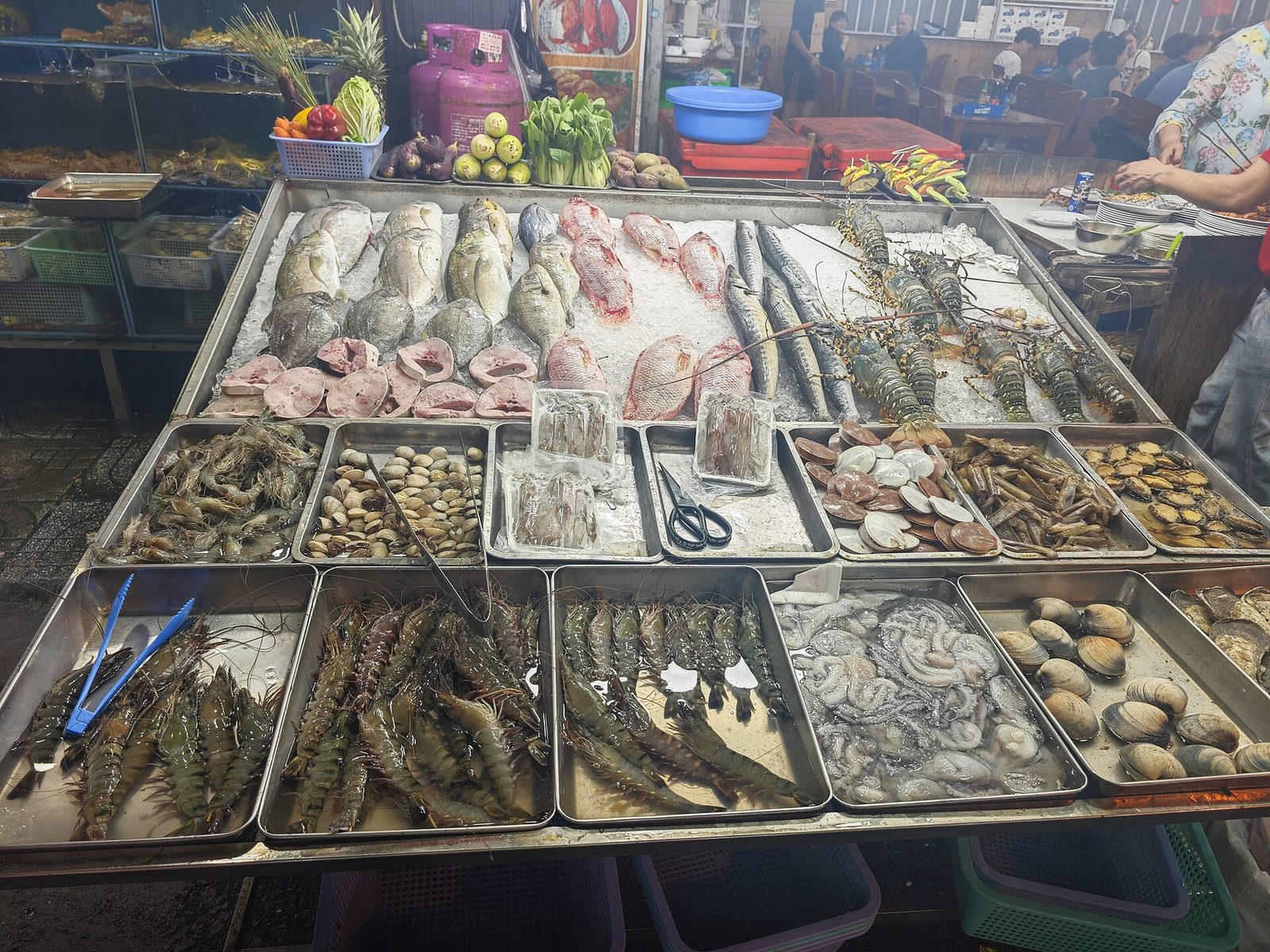
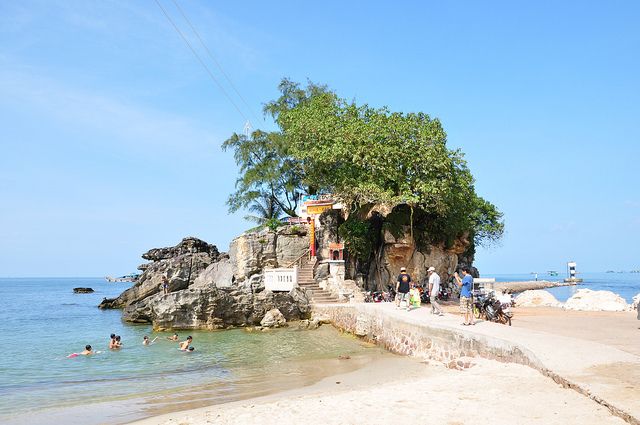
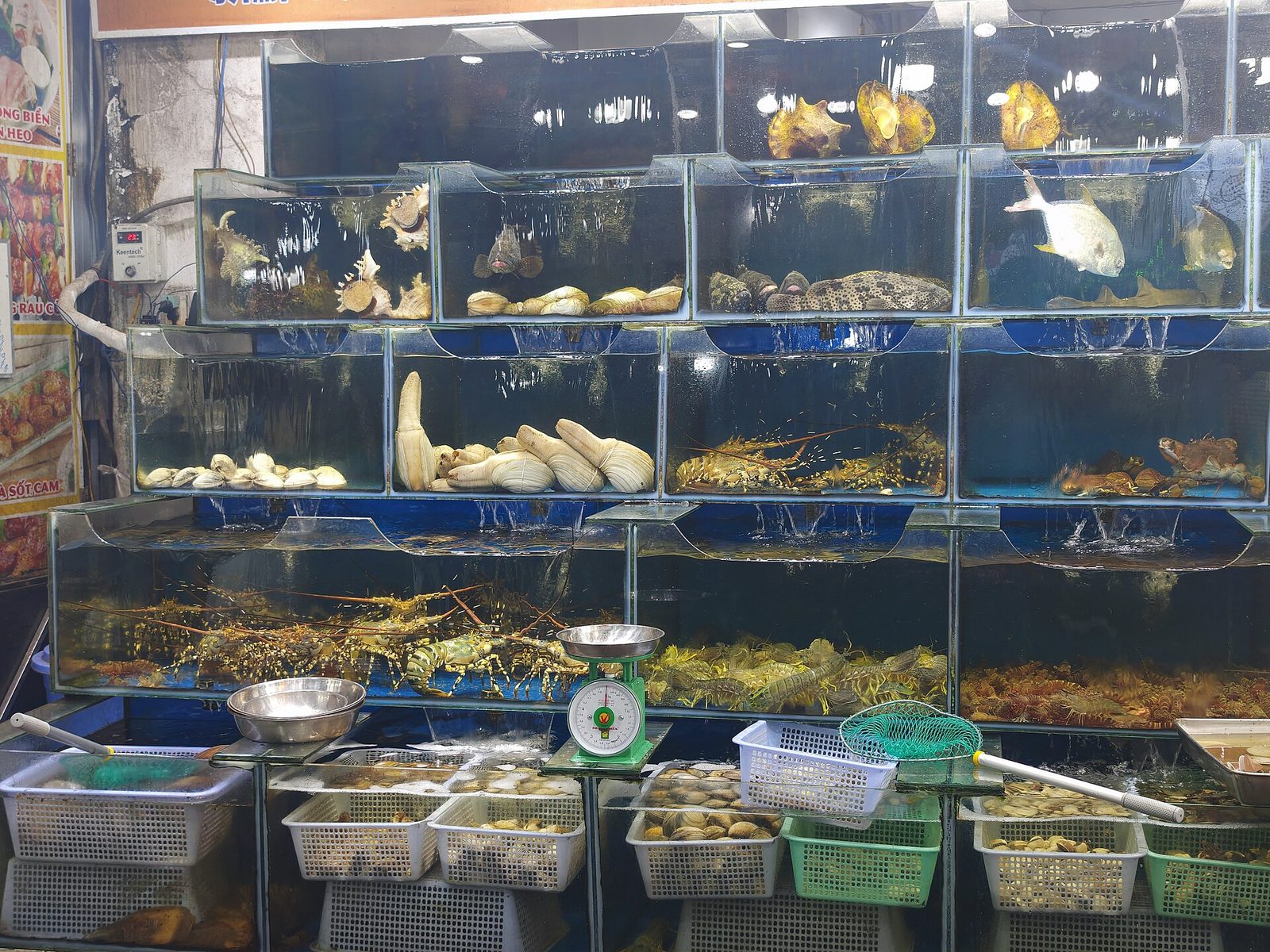
The market runs along Bach Dang Street in Duong Dong, a short walk from Dinh Cau Rock, and gets going properly from around 18:00. It’s touristy in the way that all famous markets eventually become, but the seafood is the real thing — tanks of live crab, prawn, squid, sea urchin, and cone snail that you pick by weight and have grilled or steamed at the stall.
Rough current prices: grilled oysters or scallops run 15,000–20,000 ₫ each (under US$1). Squid goes for around 120,000 ₫/kg (~US$5). Lobster sits at about 300,000 ₫/kg (~US$12) — reasonable by the standards of most countries. Sea urchin is 85,000–120,000 ₫ per urchin depending on size and the season.
The critical thing with market seafood: it’s almost always sold by weight, not by portion. Before anything goes near a flame, confirm whether the price is per 100g or per kilo, watch the weigh-up, and agree the total. A tag reading 400,000 ₫ on a crab may mean that’s the per-kilo rate for a multi-kilo animal. It’s not a scam exactly — it’s just how the pricing system works — but if you don’t check, the total can surprise you.
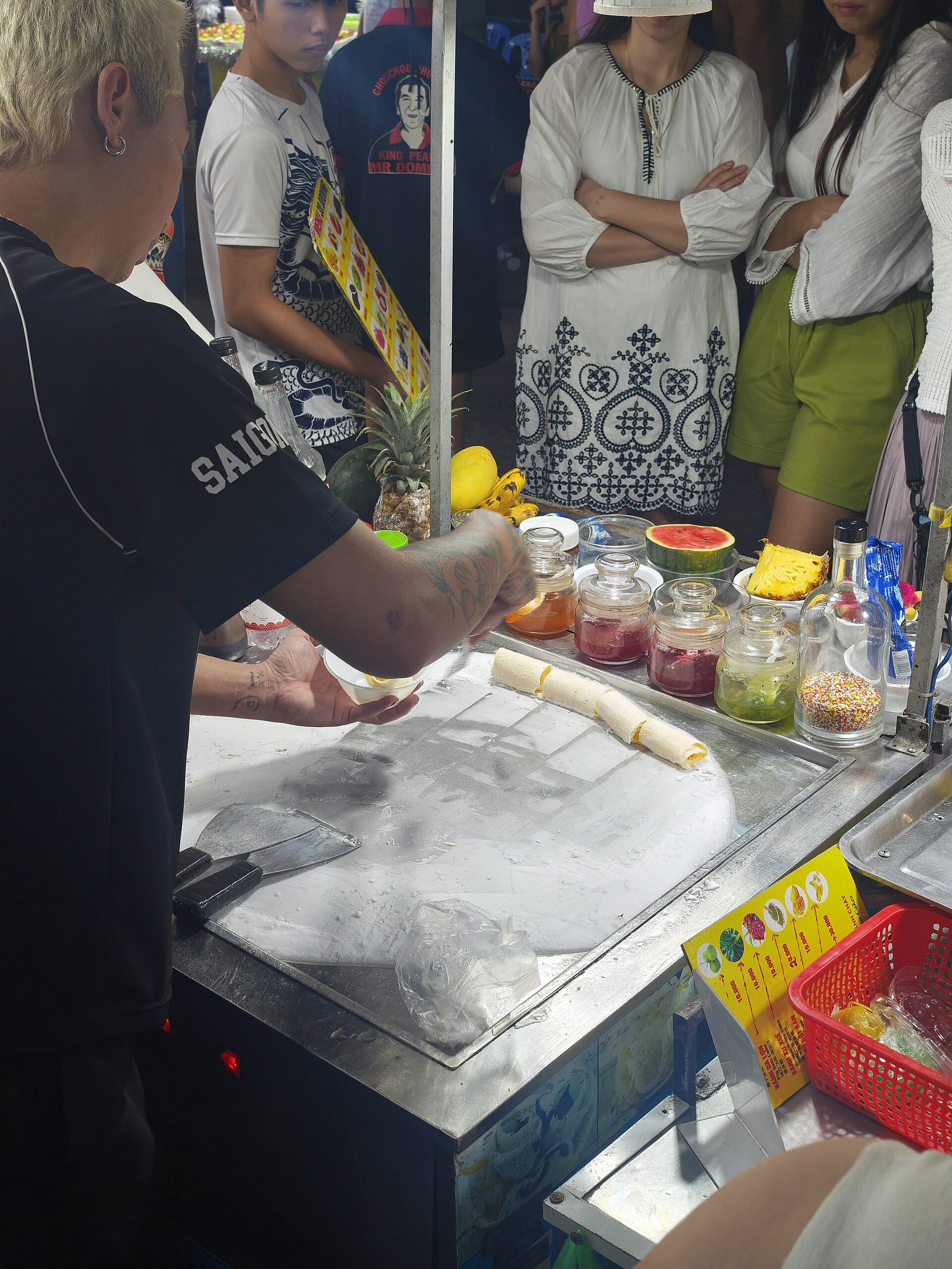
For non-seafood eating, the market also does well: grilled skewers, fresh coconut, dessert stalls with che (sweet soups), and durian in season. A solid feed for two, mixing a few seafood items with rice and vegetables, should land around 400,000–600,000 ₫ (~US$16–24) if you’re selecting mid-tier items.
Go on a weeknight if you can. Weekends draw more coach groups and the atmosphere tips further toward organised chaos.
Ham Ninh: Crab on the East Coast
Ham Ninh is a fishing village about 20 km from Duong Dong on the east coast. The road in is straightforward by scooter — about 30–40 minutes — and the destination is a cluster of stilt restaurants over the shallow water, where the main business is crab.
The local speciality is cua hoa, the flower crab: steamed whole and eaten with a dip of salt, black pepper, and lime juice. Prices vary by size and season. Expect to pay in the 500,000–800,000 ₫/kg range (~US$20–32/kg). Most restaurants charge per crab at a negotiated rate; ask the weight before you order. Alongside the crab, order a plate of morning glory (rau muong) stir-fried with garlic — it’s cheap, usually excellent, and cuts the richness.
Ham Ninh is a natural pairing with Rach Vem starfish beach further north. If you’re heading up the east coast anyway, eat lunch here and continue; see the day trips guide for that route. Morning is the better time to visit — by early afternoon the heat and the lunch coaches both arrive.
Fish Sauce: Why It Matters Here
Phu Quoc fish sauce (nuoc mam Phu Quoc) has a reputation earned over centuries. The local black anchovies (ca com), fished from the surrounding Gulf of Thailand, are layered with sea salt in large wooden barrels and left to ferment for 12–15 months. The result has a higher protein content and a more rounded flavour than most commercially produced fish sauce. Vietnamese cooks who care about these things care about this.
Khai Hoan on 30 Thang 4 Street in Duong Dong is the most visited factory, and the tour is free. You walk through rows of barrels — each holding several tonnes of fish — smell the process at different stages, and see the amber liquid drawn off for bottling. Opening hours are roughly 8:00–17:00 daily, though this can vary; a morning visit works well. Purchase at the end is expected rather than mandatory. If you’re flying home, a small bottle travels fine in checked luggage.
Other factories in the same area (Thanh Ha, for instance) are open for visits too. All cluster within a short walk of each other near Duong Dong’s waterfront.
Black Pepper Farms
Phu Quoc has been growing black pepper for at least 200 years, and the island’s pepper has geographical indication (GI) status — meaning “Phu Quoc pepper” on a label sold here is the real thing. The vines grow on thick wooden posts in red-soil plots, and harvest runs roughly February to April when the green clusters are hand-picked and sun-dried.
Several farms north of Duong Dong welcome visitors. The tour is usually free or a small token, with a shop attached selling fresh, dried, and flavoured varieties — including long pepper and red pepper, which are rarer. The pepper here is noticeably more aromatic than the commodity stuff. A bag makes a genuinely useful souvenir.
Sim Wine
Ruou sim is made from rose-myrtle berries (sim berries) that grow across Phu Quoc’s hills and scrubland. The wine is a deep ruby-pink, mildly sweet, and low enough in alcohol to drink at lunch without ruining the afternoon. You’ll find it bottled everywhere — in the market, in every pharmacy-turned-souvenir-shop, at the airport. Prices for a standard bottle run 80,000–150,000 ₫ (~US$3–6).
The better approach before buying several bottles: visit a sim wine farm. Most do short walks through the berry orchards and a free tasting. The flavour varies noticeably between producers — some are syrupy, others more tannic and drier. Ask your hotel or any tour desk for the nearest farm.
Local Dishes Worth Finding
Goi ca trich is Phu Quoc’s most distinctive dish: raw herring (trich) sliced thin and cured briefly in lime juice, then mixed with banana flower, shallots, roasted peanuts, sesame, and fresh herbs. It’s acidic, fresh, and nothing like the resort menus. Find it at local restaurants around Duong Dong and at some market stalls. If you see it listed, order it.
Bun quay is a local noodle soup — lighter than pho, made with fresh seafood broth and served with thin round noodles. Common at breakfast spots in Duong Dong; a bowl costs 40,000–60,000 ₫ (~US$1.50–2.50). Look for small places with a single pot going from early morning.
Banh mi is everywhere on the island — Duong Dong has a handful of dedicated banh mi shops that open from early morning, usually 15,000–25,000 ₫ (~US$0.60–1).
Grilled corn and sweet potato, from street vendors near the market, go for 10,000–20,000 ₫ each. Simple and reliable.
Where to Eat at Sunset
Long Beach (Bai Truong) and Ong Lang on the west coast face directly into the Gulf of Thailand, and from about 17:30 the light becomes the main attraction. Restaurants along this strip do a reasonable business in cocktails and mid-range food — think 150,000–400,000 ₫ per main course. The setting earns a premium. It’s worth one sunset meal; don’t make it your eating strategy for the whole trip.
For consistent quality cooking at honest prices, head into the back streets of Duong Dong at lunchtime and look for: hand-written signs, plastic stools, a short menu, and a queue of people who live there. A full lunch at one of these spots rarely runs past 80,000–150,000 ₫ per person.
Practical Notes
Duong Dong is the centre of eating on the island — markets, local cafes, factories, and the main concentrations of both cheap and mid-range restaurants all cluster here. Ham Ninh is the east-coast crab destination. The resort strips on Long Beach and Ong Lang have Western-leaning restaurants at Western-leaning prices.
Vegetarians are reasonably well-served at Vietnamese restaurants — tofu dishes, vegetable stir-fries, rice and noodle options are always available. Strict vegans will want to flag dietary requirements clearly, as fish sauce is used in most Vietnamese cooking as a base.
For accommodation while you work through the food list, /hotels/ has options across the island from guesthouses to resorts.
Staying near the stalls is the point of the hotels near Duong Dong guide.
FAQ
How much is dinner at the Phu Quoc night market?
A mixed meal for two, seafood plus rice and vegetables, is about 400,000–600,000 ₫ if you pick mid-range items. Oysters are about 15,000–20,000 ₫ each. Confirm whether a seafood price is per 100 grams or per kilo before it is cooked.
How much is Ham Ninh crab?
Flower crab is about 500,000–800,000 ₫ a kilo. Ask the weight before you order.
What does a bowl of bun quay cost?
About 40,000–60,000 ₫. Banh mi in Duong Dong is about 15,000–25,000 ₫.